
"coffee insect management"
600 article(s) found

Characteristics of Tanzanian coffee flavor of Tanzania coffee
Due to political instability and rampant diseases and insect pests, the coffee industry in Tanzania has been damaged, leading to a decline in the overall level of coffee and instability in quality, which in turn lead to lower prices, which are usually the result of a further decline in the coffee industry. What's more, it is estimated that more than 12% of the Arabica coffee grown in northern Tanzania from 1969 to 1985 has gone.

Characteristics of Tanzanian coffee flavor of Tanzania coffee
Due to political instability and rampant diseases and insect pests, the coffee industry in Tanzania has been damaged, leading to a decline in the overall level of coffee and instability in quality, which in turn lead to lower prices, which are usually the result of a further decline in the coffee industry. What's more, it is estimated that more than 12% of the Arabica coffee grown in northern Tanzania from 1969 to 1985 has gone.

Characteristics of Tanzanian coffee flavor of Tanzania coffee
Due to political instability and rampant diseases and insect pests, the coffee industry in Tanzania has been damaged, leading to a decline in the overall level of coffee and instability in quality, which in turn lead to lower prices, which are usually the result of a further decline in the coffee industry. What's more, it is estimated that more than 12% of the Arabica coffee grown in northern Tanzania from 1969 to 1985 has gone.

Classification of Coffee beans Coffee Origin Coffee Coffee practice
Arabica was the only kind of coffee beans, then in the 19th century, there was a large area of diseases and insect pests, coffee growers began to look for other varieties of coffee resistant to diseases and insect pests, so Rob's special was discovered and began to be planted artificially. Robert's special growth in low-altitude areas, characterized by resistance to diseases and insect pests, cold, drought resistance, a word description, thick, but the taste is relatively comparative

Coffee species introduction Coffee Tree introduction Coffee planting method
Arabica was the only kind of coffee beans, then in the 19th century, there was a large area of diseases and insect pests, coffee growers began to look for other varieties of coffee resistant to diseases and insect pests, so Rob's special was discovered and began to be planted artificially. Robert's special growth in low-altitude areas, characterized by resistance to diseases and insect pests, cold, drought resistance, a word description, thick, but the taste is relatively comparative

Coffee Bean Manor Huilan Lerusa Manor, Colombia
Manor basic information origin: Colombia Huilan Lerusa Manor Tree species: old varieties Bobang 60%, Tibica 40% altitude: 1550 meters taste: sweet pulp, mellow, depth, excellent sense of balance the manor does not use a high-speed and convenient dryer, but uses the traditional SUN DRY drying method, acid and alcohol bitterness get the greatest concentration and sublimation. The highest grade in Huilan District, a famous place in Colombia.

The difference of taste and flavor between Katim and Tippika Coffee in Yunnan
The so-called new variety of iron pickup coffee beans actually refers to catimor (Katimo), which is a hybrid of timor and Arabica of the Roberta family. Compared with the old varieties, it lacks rich aroma and taste, and has a relatively shallow smell of grass and soil, but it has the advantages of resistance to diseases and insect pests, easy management and high yield, and its yield per mu is up to 350kg raw beans.
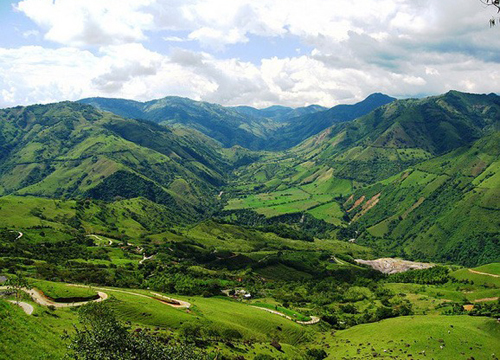
Columbia Coffee Coffee Manor Columbia Huilan Coffee Estate
Manor basic information origin: Colombia Huilan Lerusa Manor Tree species: old varieties Bobang 60%, Tibica 40% altitude: 1550 meters taste: sweet pulp, mellow, depth, excellent sense of balance the manor does not use a high-speed and convenient dryer, but uses the traditional SUN DRY drying method, acid and alcohol bitterness get the greatest concentration and sublimation. The highest grade in Huilan District, a famous place in Colombia.

Colombia Coffee Bean Cactus Estate Features Flavor Description Taste Estate Variety Introduction
Colombia Coffee Bean Cactus Farm Features Flavor Description Taste Farm Variety Introduction Cup of Excellence (COE) Project and trademark are currently owned and managed by the Alliance for Coffee Excellence (ACE), a nonprofit organization. ACE collaborates with the host country of the Super Cup every year to complete the fine products

The origin of coffee introduces how to press out the oil in coffee.
Arabica was the only kind of coffee beans, then in the 19th century, there was a large area of diseases and insect pests, coffee growers began to look for other varieties of coffee resistant to diseases and insect pests, so Rob's special was discovered and began to be planted artificially. Robert's special growth in low-altitude areas, characterized by resistance to diseases and insect pests, cold, drought resistance, a word description, thick, but the taste is relatively comparative

What is organic coffee? what's the difference between organic coffee and ordinary coffee?
Organic ∶ has life. Relating to or derived from an organism. It now refers to those containing carbon atoms, except carbon monoxide, carbon dioxide, carbonic acid, carbonates and certain carbon compounds. Its compound refers to the compound composed of carbon element and hydrogen, oxygen, nitrogen or sulfur. It's called organic matter for short. General plant bodies and animal remains, faeces and other decaying substances, after micro

Colombia boutique coffee estate introduces Colombia Huilan Lerusa Coffee Manor Colombia
Manor basic information origin: Colombia Huilan Lerusa Manor Tree species: old varieties Bobang 60%, Tibica 40% altitude: 1550 meters taste: sweet pulp, mellow, depth, excellent sense of balance the manor does not use a high-speed and convenient dryer, but uses the traditional SUN DRY drying method, acid and alcohol bitterness get the greatest concentration and sublimation. The highest grade in Huilan District, a famous place in Colombia.

Introduction of Fine Coffee in Huilan Lerusa Manor, Colombia
Manor: Colombian Huilan Lerusa Manor Tree species: old Bobang 60%, Tibica 40% altitude: 1550 meters above sea level: sweet pulp, mellow, depth, excellent sense of balance the manor does not use a high-speed and convenient dryer, but uses the traditional SUN DRY drying method. Manor basic information origin: Colombia Huilan Lerusa manor tree species: old varieties Bobang 60%, Tibika 40
Common Diseases and pests in Coffee cultivation and Prevention and Coffee basic knowledge
(1) Pest control 1. Coffee tiger longicorn beetles are distributed in all coffee producing areas in the world, and also occur in Yunnan, Guangxi and Hainan Island in China. It is one of the major pests of coffee. The coffee tiger longicorn beetle harms the coffee trunk for more than 2 years. At first, it eats between the cambium and xylem, and then eats the xylem. The victim was a curved tunnel filled with sawdust.

How to grow coffee beans _ how to grow coffee technical experience sharing _ can you make money by growing coffee beans
Professional coffee knowledge exchange more information on coffee beans Please follow the coffee workshop (Wechat official account cafe_style) Coffee lovers will study how to roast and brew coffee beans, but seldom delve into how coffee beans are grown. Today, Qianjie Coffee would like to share some knowledge of coffee bean cultivation with you. Shade planting (Shade-grown) and all-day planting (sun-g)

Introduction of Colombian Coffee Manor and producing area
In the past 12-13 years, in order to increase production and income, Colombia, a big coffee country, has rewarded improved new varieties in the form of national policies (high fruit rate, strong resistance to diseases and insect pests, and low planting costs). It is even semi-mandatory to cut down old varieties and change them to improved varieties in some areas. Under such conditions, in order to protect the old varieties with small yield, easy to diseases and insect pests, but high quality, the manor has been firmly rejected.

A basic introduction to Columbia Coffee Manor: planting situation, Variety characteristics and Flavor Manor Calendar
Colombia Huilan Lerusa Manor Guide: Manor: Colombia Huilan Lerusa Manor Tree species: old Bobang 60%, Tibica 40% altitude: 1550 meters taste: sweet pulp, mellow, depth, excellent sense of balance the manor does not use a high-speed and convenient dryer, but uses the traditional SUN DRY drying method, basic information origin: Colombia Huilan Lerusa Manor
Coffee production in Indonesia has dropped sharply!
In recent years, coffee production in Indonesia has been challenged by climate change and an increase in farm diseases and insect pests. The Foreign Agriculture Service of the United States Department of Agriculture predicts that Indonesian coffee exports will fall by 32% in 2023 to 24 compared with the previous year. Previously, excessive rainfall disrupted the development of coffee fruit, and coffee production dropped sharply.

Coffee trees to prevent pests Coffee trees are easy to get leaf rust how to prevent oriental fruit flies
Professional coffee knowledge exchange more coffee bean information Please pay attention to the coffee workshop (Wechat official account cafe_style) the human body will inevitably get sick, and plants will also suffer from diseases and insect pests. Of course, coffee trees also have their diseases and insect pests. There are many coffee growers in Taiwan who often assure customers that Taiwan coffee is free from diseases and insect pests and is the safest food. Coffee is a very safe food.
Common Coffee Diseases and pests in Coffee cultivation and Control methods
It is distributed in all coffee producing areas in the world, and it also occurs in Yunnan, Guangxi and Hainan Island in China. It is one of the major pests of coffee. Coffee longicorn beetles, which damage the coffee trunk by larvae for more than 2 years, initially eat between the cambium and xylem, and then eat (1) pest control. 1. Coffee tiger longicorn beetles are distributed in all coffee producing areas in the world. Yunnan, Guangxi and Hainan, China